CURRICULUM

Curriculum
The curriculum at BPS & JC is designed a range of broad balanced and comprehensive curricular that meet the educational needs of every child and the world standards they need to. The curriculum refers to the lessons and academic content to be taught to a learner in the school. In empirical terms, it may be regarded as the sum total of a planned set of educational experiences provided to a learner by a school. It encompasses general objectives of learning, courses of study, subject-wise instructional objectives and content, pedagogical practices and assessment guidelines. The curriculum provided by CBSE is based on National Curriculum Framework-2005 and seeks to provide opportunities for students to achieve excellence in learning.


Salient Features of BPS
Secondary School Curriculum
Provide ample scope for physical, intellectual and social development of students.
Enlist general and specific teaching and assessment objectives.
Assessment of notebooks and assignments
Uphold Constitutional values such as socialism, secularism, democracy, republican character, justice, liberty, equality, fraternity, human dignity and the unity and integrity of the Nation by encouraging values-based learning activities.
Nurture Life-Skills by prescribing curricular and co-curricular activities to help improve self-esteem, empathy towards others and different cultures etc.
Integrate innovations in pedagogy, knowledge and application, such as human sciences with technological innovations to keep pace with the global trends in various discipline.
Promote inclusive education by providing equal opportunities to all students.
Integrate environmental education in various disciplines from classes I-XII.
Equally emphasize Co-scholastic areas of Art Education and Health and Physical Education.
Objectives of the Curriculum
Achieve cognitive, affective and psychomotor excellence
Enhance self-awareness and explore innate potential.
Promote Life Skills goal setting, decision making and lifelong learning.
Inculcate values and foster cultural learning and international understanding in an interdependent society.
Acquire the ability to utilize technology and information for the betterment of humankind.
Strengthen knowledge and attitude related to livelihood skills.
Develop the ability to appreciate art and showcase talents.
Promote physical fitness, health and well-being.
Secondary Classes – VI to VIII
English
Mathematics
Science
Social
Hindi
Telugu
Sanskrit
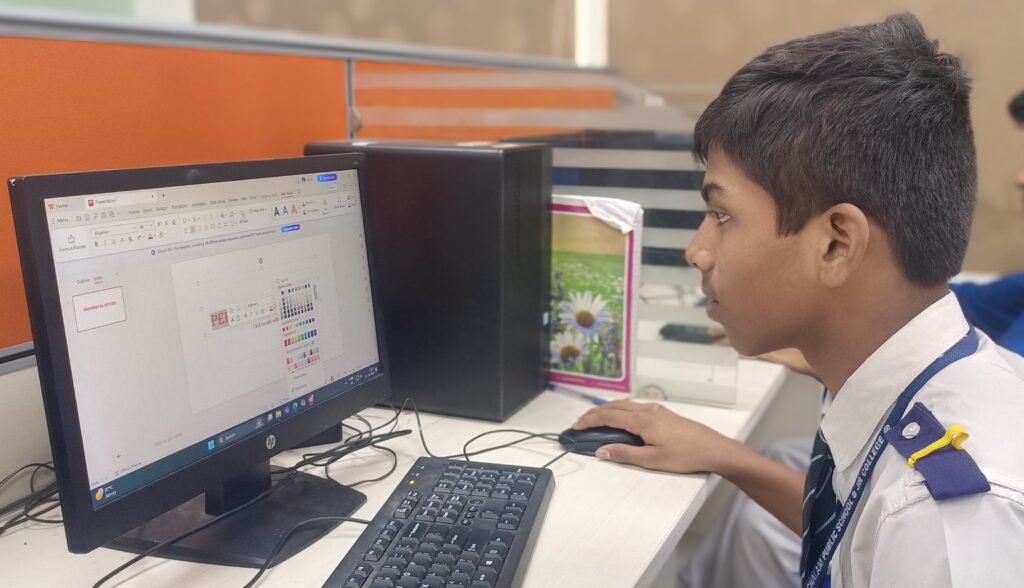
Computer Applications
General Knowledge
Art
Value Education
Music
Secondary Classes
- IX & X

- English
- Mathematics
- Science
- Social Sciences
- Computer Applications
- Health and Physical Education
- Work Experience
- General Knowledge
- Art Education
Senior Secondary Classes - XI & XII
SCIENCE GROUP
Curriculum Areas at Secondary Level The secondary school curriculum acknowledges the fact that subjects like language, mathematics, science and social studies help the cognitive development of the child and, therefore require a greater academic emphasis.
- English
- Physics
- Chemistry
- Mathematics
- Computer Science
Scholastic Areas
The curriculum envisages individualized learning acumen and seeks to explore the potential of students in acquiring substantial acknowledge and skills through academic rigors. With greater academic orientation and research skills in core academic areas, students would evolve as judicious young adults with a sense of real self-estimate having true values and principles. The scholastic areas are as follows:
Languages
Languages include Hindi and English .The curricula in languages focus on listening, speaking, reading and writing skills and, hence, develop effective communicative proficiencies. Learners use language to comprehend, acquire and communicate ideas in an effective manner.
Social Sciences
- Geography
- History
- Economics
- Political Science
- Disaster Management
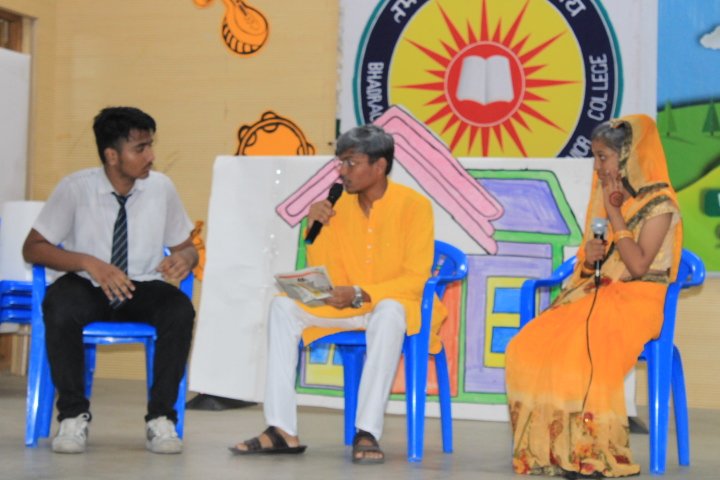
Projects
Intends to make learners understand their cultural, geographical and historical milieus and gain in-depth knowledge, attitude, skills and values necessary to bring about transformation for a better world. Social Science include the learning of history and culture, geographical environment, global institutions, constitutional values and norms, politics, economy, interpersonal and societal interactions, civic responsibilities and the incorporation of the above-mentioned learning. Learners appreciate and value everyone’s right to feel respected and safe, and, also understand their Fundamental Rights and Duties and behave responsibly in the society
Science
- Biology
- Physics
- Chemistry
Includes gaining knowledge about Food, Materials, The World of The Living, How Things Work, Moving Things, People and Ideas, Natural Phenomenon and Natural Resources. The focus ison knowledge and skills to develop a scientific attitude and to use and apply such knowledge for improvingthe quality of life. This learning can be used to analyze, evaluate, synthesize and create. Learners understand and appreciate the physical, biological and technological world and acquire the knowledge and develop attitude, skills and values to make rational decisions in relation to it.
Mathematics
Includes acquiring the concepts related to number sense, operation sense, computation, measurement, geometry, probability and statistics, the skill to calculate and organize, and the ability to apply this knowledge and acquired skills in their daily life. It also includes understanding of the principles of reasoning and problem solving. Learners identify, integrate and apply numerical and spatial concepts and techniques. They have clarity of concepts and are able to connect them to the real world. Learners rationalize and reason about pre-defined arrangements, norms and relationships in order to comprehend, decode, validate and develop relevant patterns.
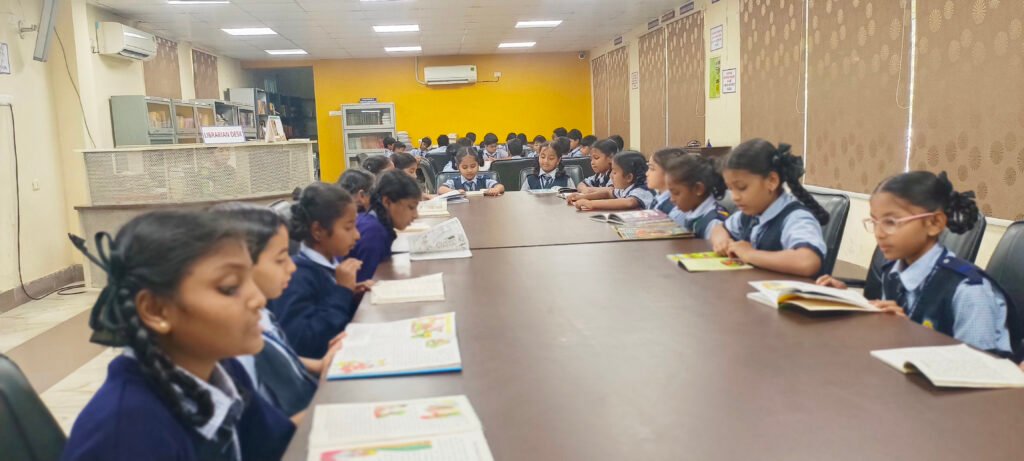
Computer Applications
Includes acquiring the concepts related to number sense, operation sense, computation, measurement, geometry, probability and statistics, the skill to calculate and organize, and the ability to apply this knowledge and acquired skills in their daily life. It also includes understanding of the principles of reasoning and problem solving. Learners identify, integrate and apply numerical and spatial concepts and techniques. They have clarity of concepts and are able to connect them to the real world. Learners rationalize and reason about pre-defined arrangements, norms and relationships in order to comprehend, decode, validate and develop relevant patterns.
Learning Outcomes
Ability to create a simple website
Ability to embed images, audio and video in an HTML page
Ability to use style sheets to beautify the web pages
Ability to write iterative programs with Scratch/Python.
Ability to Interface a web site with a web server and record the details of a user's request.
Ability to follow basic cyber ethics.
Ability to familiarize with network concepts.
Continuous and Comprehensive Evaluation

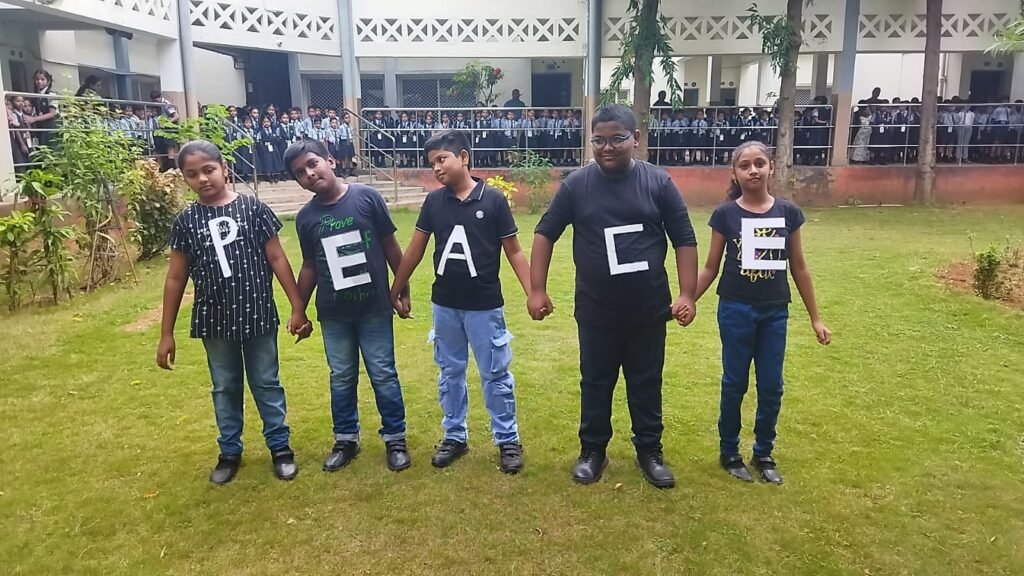
Aim of Education
Education aims at making children capable of becoming responsible, productive and useful members of a society. Knowledge, skills and attitudes are built through learning experiences and opportunities created for learners in school. It is in the classroom that learners can analyse and evaluate their experiences, learn to doubt, to question, to investigate and to think independently. The aim of education simultaneously reflects the current needs and aspirations of a society as well as its lasting values and human ideals. At any given time and place it can be called the contemporary and contextual articulations of broad and lasting human aspirations and values.
Characteristics of learning
All children are naturally motivated to learn and are capable of learning
Understanding and developing the capacity for abstract thinking, reflection and work are the most important aspects of learning
Children learn in a variety of ways - through experience, making and doing things, experimentation, reading, discussion, asking, listening, thinking , reflecting, and expressing oneself in speech or writing both individually and with others. They require opportunities of all these kinds in the course of their development
Teaching something before the child is cognitively ready takes away real learning. Children may ‘remember’ many facts but they may not understand them or be able to relate them to the world around them
Learning takes place both within the school and outside school. Learning is enriched if these two arenas interact with each other. Art and work provide opportunities for holistic learning that is rich in tacit and aesthetic components. Such experiences are essential to be learnt through direct experience and integrated with life
Learning must be paced so that it allows learners to engage with concepts and deepen the understanding rather than remembering only to forget after examinations. At the same time learning must provide variety and challenge, and be interesting and engaging Boredom is a sign that the task may have become mechanically repetitive for the child and of little cognitive value
Learning can take place with or without mediation. In the case of the latter, the social context and interactions, especially with those who are capable, provide avenues for learners to work at cognitive levels above their own